
Understanding FDIC Insurance: Protecting Your Money in Banks
The Federal Deposit Insurance Corporation (FDIC) is an independent agency of the U.S. government created in 1933 in response to the widespread bank failures during the Great Depression. Its primary purpose is to maintain stability and public confidence in the nation's financial system. The FDIC achieves this by insuring deposits in banks and savings associations. This means that if a bank fails, the FDIC guarantees to protect depositors up to a certain amount per depositor, per insured bank.
Currently, the standard insurance amount is $250,000 per depositor, per insured bank. This coverage applies to various deposit accounts, including checking accounts, savings accounts, money market deposit accounts, and certificates of deposit (CDs). The FDIC insurance helps prevent bank runs and ensures that people don't lose their hard-earned money if their bank becomes insolvent.
Cryptocurrency: A Decentralized and Volatile Asset Class
Cryptocurrency, on the other hand, is a digital or virtual currency designed to work as a medium of exchange using cryptography to secure transactions and to control the creation of new units. Bitcoin, Ethereum, and Litecoin are just a few examples of the thousands of cryptocurrencies in existence today. Unlike traditional currencies issued by governments, cryptocurrencies operate on a decentralized technology called blockchain, which distributes transaction records across many computers to make them difficult to alter or counterfeit.
One of the defining characteristics of cryptocurrency is its volatility. The value of cryptocurrencies can fluctuate dramatically in short periods, influenced by factors such as market sentiment, regulatory announcements, technological advancements, and global economic events. This volatility introduces a level of risk that is not typically associated with traditional, government-backed currencies.
Is Cryptocurrency Insured by the FDIC? The Clear Answer
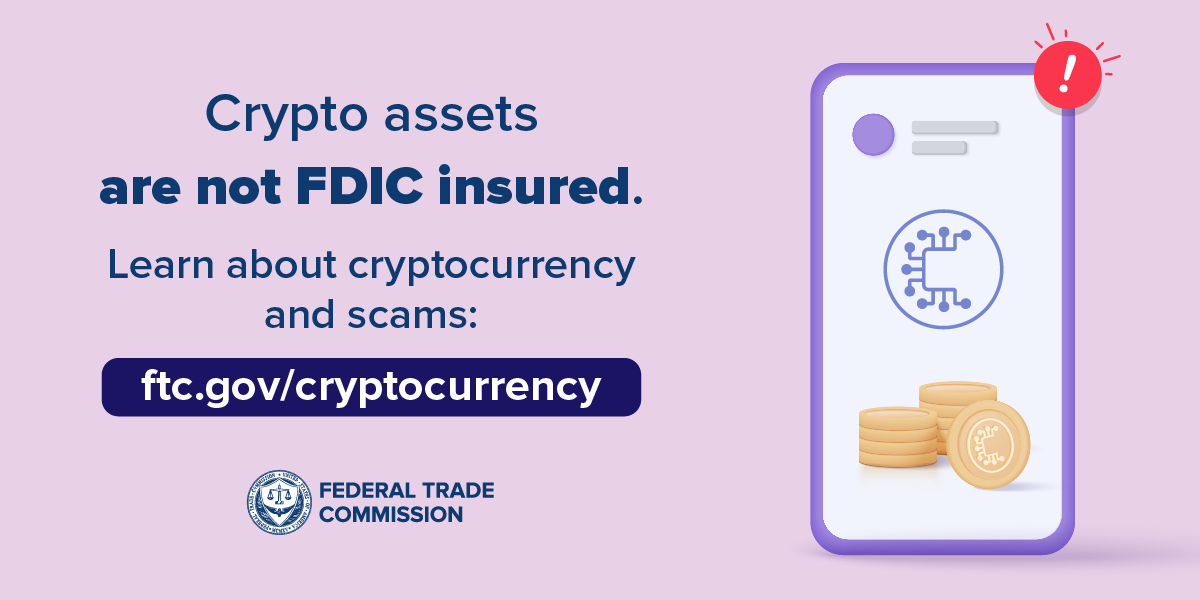
The straightforward answer is no, cryptocurrency is generally not insured by the FDIC. FDIC insurance covers deposits held in insured banks and savings associations. Since most cryptocurrencies are not held in these traditional financial institutions, they do not fall under the FDIC's protection. This is a crucial distinction to understand when considering investing in or using cryptocurrencies.
It's important to note that even if you purchase cryptocurrency through a platform that partners with a traditional bank, the FDIC insurance typically only covers the funds held in the bank account, not the cryptocurrency itself. For example, if you have U.S. dollars in a bank account used to buy cryptocurrency, the USD portion might be FDIC-insured, but the moment those dollars are converted into cryptocurrency, the FDIC insurance no longer applies to that asset.
Exceptions and Nuances to Consider
While cryptocurrency itself is not generally FDIC-insured, there are some specific scenarios where a degree of protection might exist, albeit indirectly. For example, some cryptocurrency exchanges hold customer funds in FDIC-insured bank accounts. In this case, the cash deposits held by the exchange may be insured, but only up to the $250,000 limit per depositor, per insured bank. However, this insurance would only cover the loss of the cash deposits due to the bank's failure, not the loss of value or theft of the cryptocurrency itself.
Another potential area of nuance lies in the evolving regulatory landscape. As governments and financial institutions grapple with the growing popularity of cryptocurrencies, there may be future regulations or insurance products specifically designed to protect cryptocurrency holders. However, as of the current date, such comprehensive insurance coverage is not widely available or mandated.
Understanding the Risks of Holding Cryptocurrency
Given that cryptocurrency is not typically FDIC-insured, it's essential to understand the risks involved in holding these digital assets. These risks can include:
- Market Volatility: As mentioned earlier, the value of cryptocurrencies can fluctuate significantly, leading to potential losses.
- Security Risks: Cryptocurrency exchanges and wallets are vulnerable to hacking and theft. If your cryptocurrency is stolen, it may be difficult or impossible to recover.
- Regulatory Uncertainty: The legal and regulatory status of cryptocurrencies varies widely across jurisdictions and is subject to change. This uncertainty can impact the value and usability of cryptocurrencies.
- Loss of Private Keys: If you lose your private keys, which are necessary to access your cryptocurrency, you may permanently lose access to your funds.
- Exchange Insolvency: If a cryptocurrency exchange goes bankrupt, you may lose your cryptocurrency holdings stored on that exchange.
How to Protect Your Cryptocurrency Holdings
While FDIC insurance doesn't cover cryptocurrency, there are several steps you can take to protect your digital assets:
Use a Hardware Wallet
Hardware wallets are physical devices that store your private keys offline, providing an extra layer of security against hacking and malware. These are considered one of the safest ways to store cryptocurrency.
Enable Two-Factor Authentication (2FA)
Two-factor authentication adds an extra layer of security to your cryptocurrency exchange accounts and wallets. It requires you to enter a code from your phone or another device in addition to your password.
Diversify Your Holdings
Don't put all your eggs in one basket. Diversifying your cryptocurrency investments can help mitigate risk.
Research Cryptocurrency Exchanges
Before using a cryptocurrency exchange, research its security measures and reputation. Choose exchanges with strong security protocols and a proven track record.
Keep Your Software Up to Date
Regularly update your cryptocurrency wallet software and operating systems to patch security vulnerabilities.
Be Wary of Phishing Scams
Be cautious of phishing emails and websites that attempt to steal your private keys or login credentials. Always verify the authenticity of websites and communications before entering sensitive information.
The Future of Cryptocurrency Regulation and Insurance
The cryptocurrency landscape is constantly evolving, and regulatory frameworks are gradually being developed to address the unique challenges and opportunities presented by these digital assets. It's possible that in the future, we may see the emergence of insurance products specifically designed to protect cryptocurrency holdings. However, as of now, such insurance is not widely available or standardized.
As the cryptocurrency industry matures, it is likely that regulators will continue to explore ways to balance innovation with consumer protection. This may involve the creation of new regulatory agencies, the development of industry standards, and the implementation of insurance schemes to safeguard cryptocurrency holders against various risks.